
Avoid spending time on website design if you already have a business plan or ideas meant for the web. Concentrate on your main objectives and allow ToromeTech to create the ideal interface for your company. We offer a full suite of custom IT services, such as web design, e-commerce shopping carts and payment gateways, content management systems (CMS), database application design, corporate branding, and marketing campaigns.
It is not technology itself, but the smart use of technology that aids in solving business problems. We should avoid being overly impressed by digitalisation. It is not a solution on its own, but rather a tool that facilitates progress. And, like any tool, its effectiveness depends on the intelligence of the users.
At Torometech, we are passionate about our work in web development, graphic design, and coding. If you have an idea or business venture that you've been contemplating for a long time, look no further. Come to us, and we will help turn your vision into reality.
We specialise in creating impressive and dynamic web content, tailored to your specific industry. You can trust that your unique offerings will be well-supported by the interfaces we design. We achieve this through thorough collaboration throughout the entire design cycle.
We are conversant in all digital media across the online, broadcast, and video mediums. We are particularly focused on utilising new technologies to create a space where they can all merge. Thus, providing a beautiful, simple, and intuitive experience. Your website should be a marketing asset that enables you to showcase your products or services, not an engineering challenge in thermodynamics or fluid mechanics.
We like to describe your website as a digital home for your business. It’s where you can showcase your expertise and tell your story through imagery, video, and written content. While these are the key features, you do not need to be an expert in any of them. You concentrate on your core business deliverables, and we will cater to the rest.
We think technology ought to be simple and easy to use, enabling us to complete tasks more smoothly and on a broader scale. We want AI-powered immersive experiences that truly comprehend us, without compromising our safety and comfort.
ReadMore
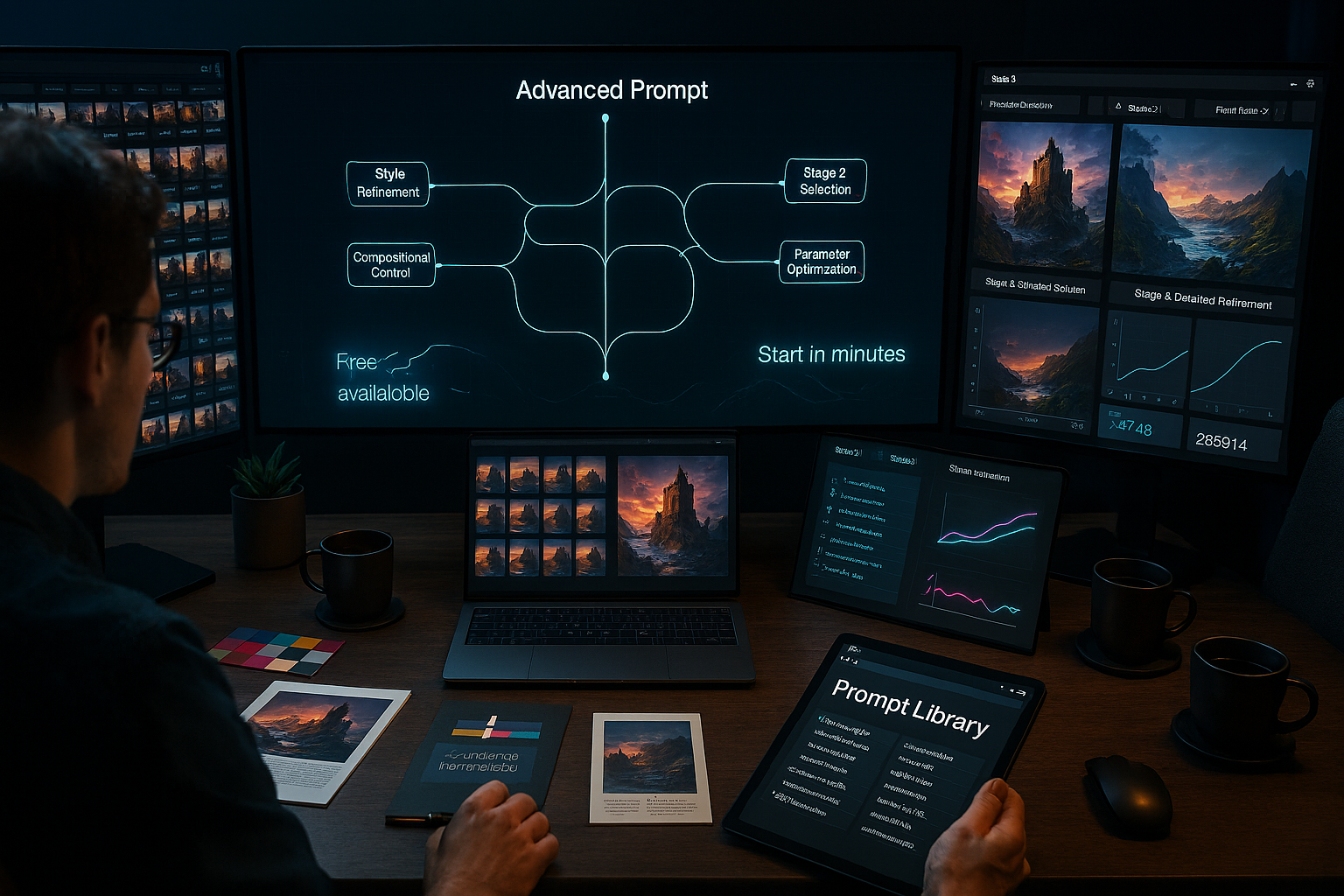
Accelerate the production of high-quality, engaging web content, from blog posts and articles to compelling marketing copy, leveraging AI-powered tools for drafting, editing, and optimisation. It helps us explore innovative design concepts and layouts generated by AI algorithms, enabling rapid prototyping and pushing creative boundaries while maintaining brand consistency.
Leverage AI's analytical capabilities to tailor user experiences, anticipate customer needs, and enhance engagement and conversion. Failure to utilise the analytical tools offered by Gen AI results in significant missed opportunities and competitive disadvantage.
It enables us to automate repetitive tasks, allowing our teams to focus on strategic initiatives and complex problem-solving. We advise our clients about the implications of Generative AI, which are profound and far-reaching. We invite you to explore the intellectual and creative possibilities alongside us.
We leverage AI to generate and analyse large volumes of data, supporting research projects, scholarly publications, and educational materials.
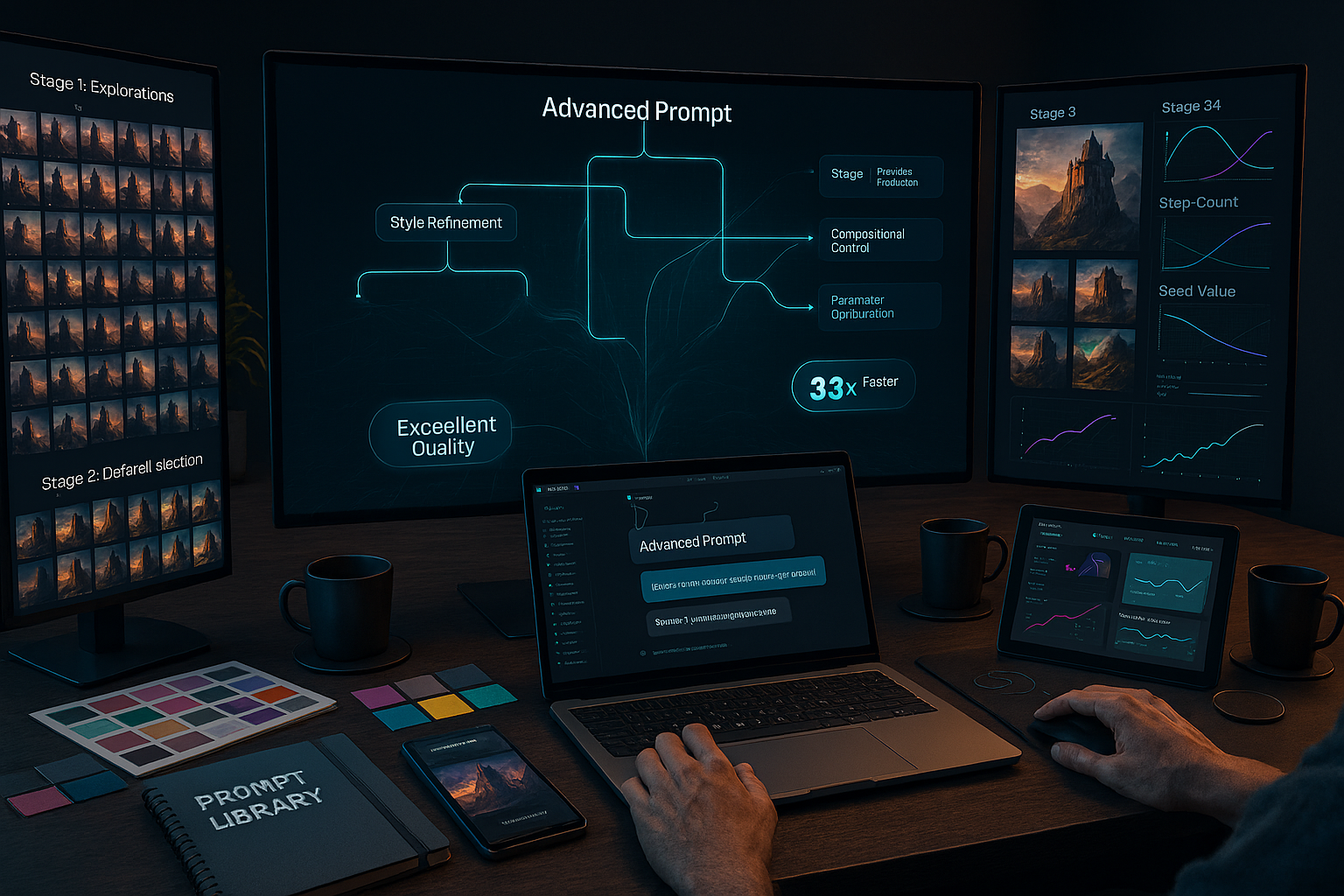
We are exploring the artistic potential of AI-driven design, pushing the boundaries of visual communication and creative expression. Recently, we published a work that utilised Gen AI to design the cover of a newly published novel and the page's entire content, with a video to boot. All done with elaborate prompt engineering, of course. - Here
We engage with Gen AI in critical discussions surrounding the ethical considerations of AI and its impact on various domains of study. It helps support the development of new educational materials and courses that incorporate the principles of Generative AI, equipping the next generation with relevant skills. You can benefit from our hands-on practical expertise.
The relentless integration of Artificial Intelligence into the fabric of our professional and personal lives is no longer a futuristic prediction; it is our present reality. AI's capabilities are expanding exponentially, from sophisticated data analysis and automated code generation to content creation and complex problem-solving. While promising unprecedented efficiency and innovation, this pervasive technological shift inevitably fuels apprehension across industries. For professionals, particularly within IT consulting and academia – fields built upon deep knowledge and specialized skills – this core question resonates profoundly: How does our established understanding of value and expertise hold up in an AI-augmented world?
The traditional maxim, ingrained through decades of professional development and academic rigor, has always been to strive for mastery – to become the virtuoso in one's chosen domain. Excellence, deep specialization, and becoming the definitive expert were the pathways to recognition and reward. However, this excerpt strikes a potentially discordant, yet increasingly relevant, chord: Mastery appears to yield diminishing returns in this AI-driven world.
It's no longer essential to be the best at anything in particular. Because now, it's not about doing the work; it's about orchestrating it. AI can play every instrument - you just need to be the conductor of the orchestra.
For generations, the pursuit of deep mastery has been the cornerstone of professional advancement. In IT, this meant becoming the go-to expert in a specific programming language, database system, or network architecture. In academia, it translates to becoming the leading authority on a niche sub-discipline, mastering intricate theoretical frameworks or experimental techniques. This dedication yielded significant rewards: efficiency, innovation within the niche, and irrefutable authority.
However, the rise of sophisticated AI tools introduces a complex dynamic that forces us to re-evaluate the universal applicability of this model. AI, particularly generative AI and advanced machine learning models, can now perform tasks that previously required years of dedicated human training, often with remarkable speed and scalability.
ReadMore
The conversation about AI safety has moved from research labs and philosophy seminars into boardrooms, parliaments, and dinner-table arguments. What was once a relatively contained technical debate about alignment and control has become entangled with industrial policy, national security, and great-power competition.
For more than two decades, Google has been the front door to the web. If a business wanted to be found, it optimised for Google. If a publisher wanted readers, it courted Google. If a student wanted sources, a consultant wanted leads, or a founder wanted customers, the journey usually began with a search box and a list of blue links. Google did not merely organise the web; it shaped the economics of attention, the architecture of websites, and the language of digital marketing itself
Artificial general intelligence has long occupied an ambiguous territory between scientific objective, technological aspiration and philosophical speculation. For decades, the idea of a machine possessing sufficiently broad intellectual capabilities to perform a substantial proportion of human cognitive work seemed permanently distant
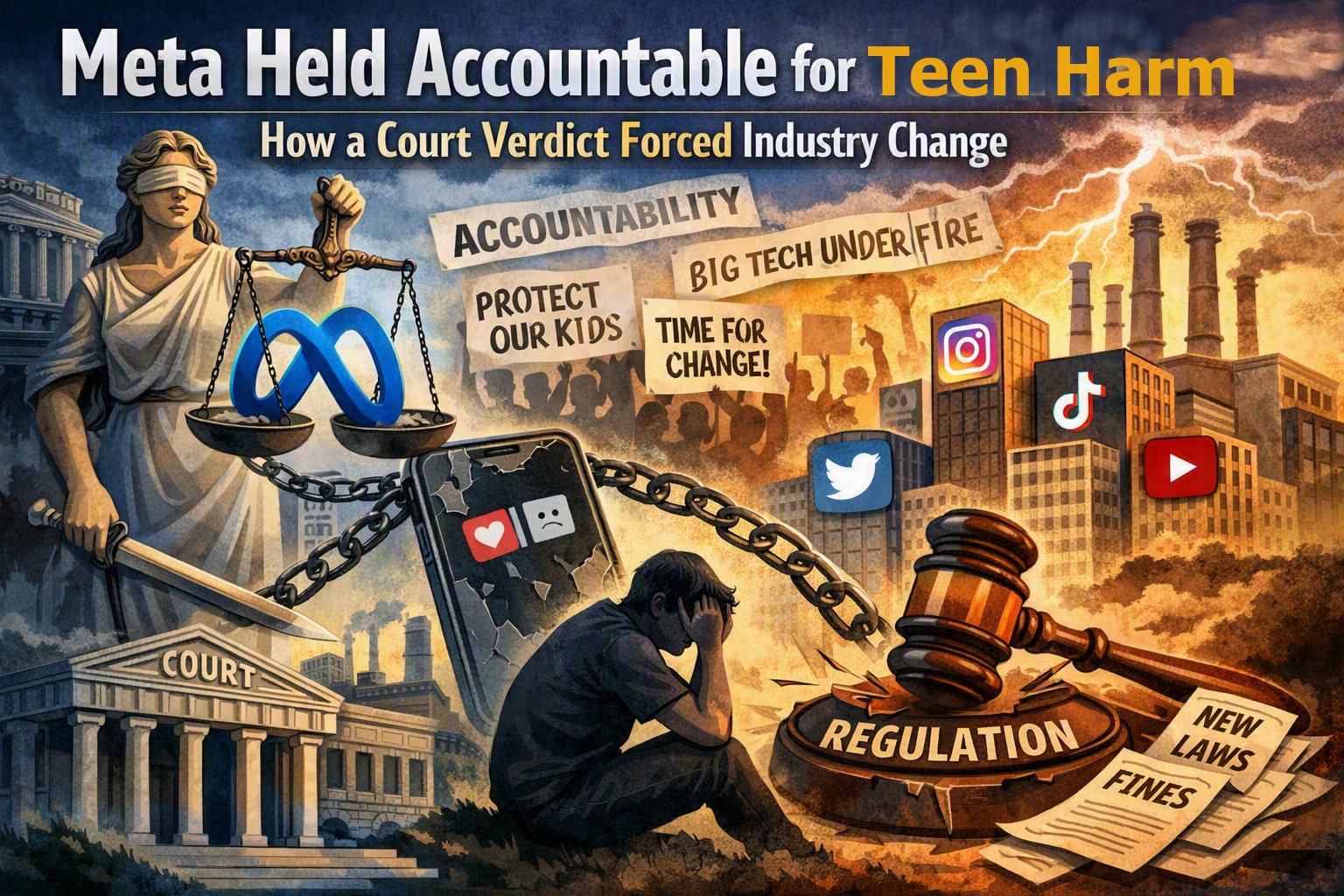
On 26 August 2026, the long-running public and regulatory debate over social media’s effects on young people reached a pivotal moment. After years of public concern, investigative reporting, whistleblower disclosures and legislative hearings, a court accepted a proposed settlement requiring Meta - the parent company of Facebook and Instagram - to agree to remedies and commitments valued at $16.68 billion
The recent road accidents in the Republic of Ireland and in England, where major fatalities occurred involving teenagers is a wake-up call. A consistent warning emerges: the digital systems now shaping childhood are not neutral tools, but commercial environments designed to capture attention, extract data and normalise surveillance. Reclaiming childhood requires neither panic nor technophobia, but a public commitment to protect developing minds, rebuild trusted relationships and hold powerful companies to account
Not long ago, creating professional visual content meant hiring specialists. A business that needed product photography, a website banner, an advertising graphic, a short promotional film or a polished social media campaign would usually commission photographers, designers, copywriters, editors, animators, videographers and agencies